Video games have found themselves becoming quite the popular form of media entertainment in the decades since their initial inception. From the arcade machines eating up dollar coins in the early 80s all the way to the early 2020s, where massive online marketplaces, powerful home consoles and all manner of exciting technology is at the fingertips of gaming enthusiasts across the world.
But where does Australia fit into all of this?
Australia’s presence has certainly been felt in the gaming world. As a growing industry on a global scale, the video game industry in Australia managed to generate $226.5 million in 2021, a sizable 22% increase of revenue from 2020. (Curry, 2022) And while numerous major triple-A companies operate within and develop games in Australia, such as Ubisoft, EA and Activision Blizzard, the major impact the country has had on the gaming industry is in the indie game department.
Indie game studios make up the majority of game development within Australia, with around 400 companies and studios operating within the country. (LEVEL UP: A Guide to the Australian Games Industry 2022) Studios such as these have created numerous games that have gone on to achieve huge international success, such as Untitled Goose Game by Melbourne studio House House in 2020, The Forgotten City by Melbourne studio Modern Storyteller in 2021 and, one of the biggest of all, Hollow Knight by Adelaide studio Team Cherry in 2017.
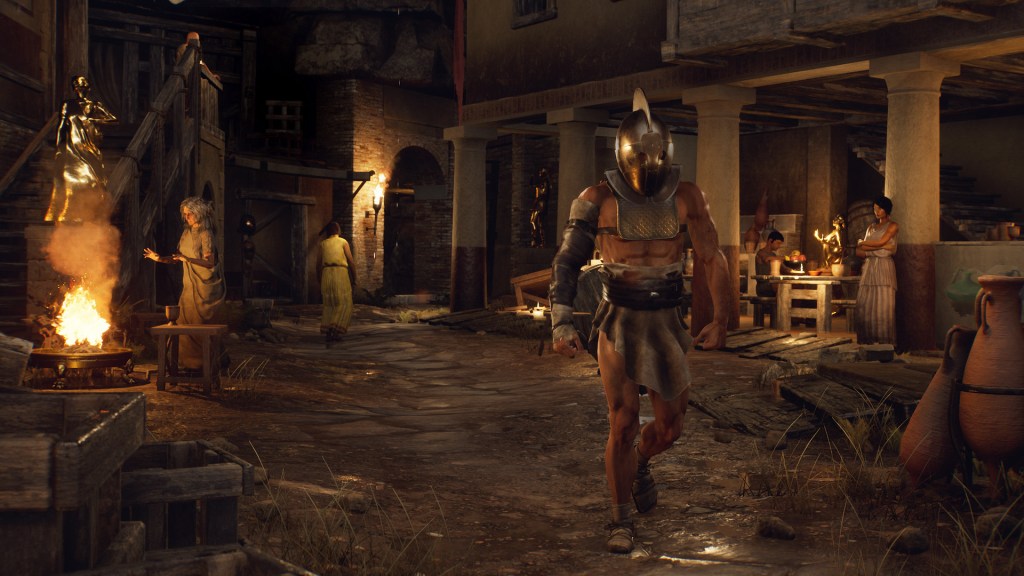


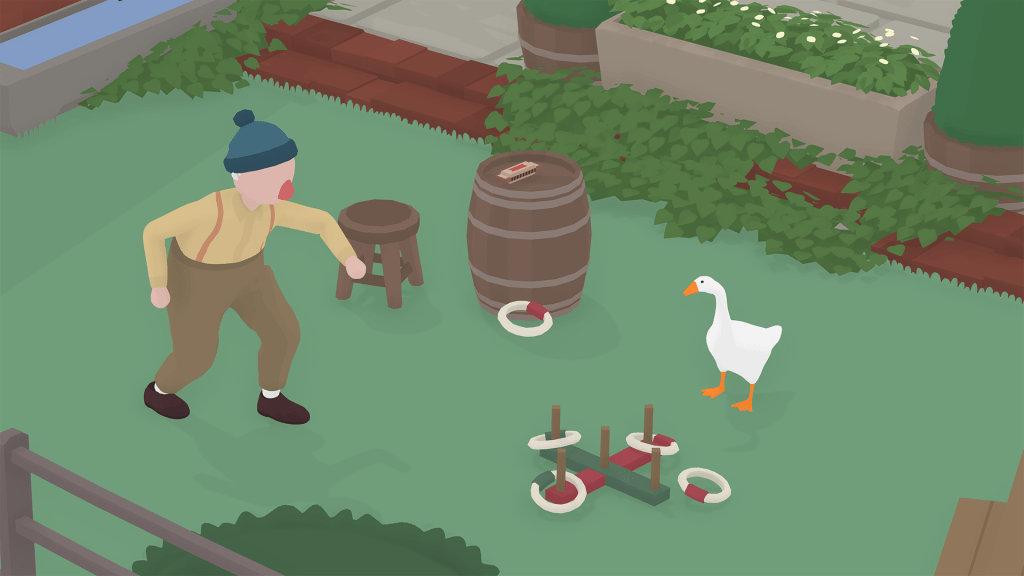

With the advantage of governmental support to the industry in the form of tax offsets from the Digital Games Tax Offset (DGTO) and funding and supportive bodies from the likes of VicScreens, providing financial support and promotional assistance to up-and-coming developers, indie games development as a thriving and active industry within Australia. And with major events promoting them like PAX Australia, an annual convention celebrating gaming and gaming culture with its own Indie Showcase occurring just earlier this month, the industry is certainly a very prominent aspect of the Australian game enthusiast’s world.
But what does the industry actually look like to those inside of it?
The experience is often quite hectic and stressful at times for developers and studios. With video game development being large, complicated projects requiring the collaborative work of artists, programmers, designers, composers, sound designers, writers, producers and publishers, there is a lot of intense work being undertaken. Especially for start-ups and smaller studios, plenty of team members often doubling, tripling and quadrupling-up on roles and responsibilities.
“Compared to other industries, maybe it’s close-ish to film.” Nicholas McDonnel, the managing director of Melbourne-based studio Samurai Punk, described the industry. “It requires cross-discipline, dialogue and communication and people coming to compromise… they have to communicate and learn to communicate in those environments and put in processes to do that. And then after that, it’s wholly very creative.”
Haydon Bakker, a Melbourne based indie game developer, comments on his experiences as well.
In addition to the amount of work any studio puts into making these games, there’s the inherent risk as well that for small teams and small publishers, even with support from VicScreens and other marketing avenues, that the games could still fail to turn a profit or find success.
“The indie game market is booming, but because of that there are hundreds of thousands of developers making their games and releasing games on a day to day basis, getting discovered in that kind of marketplace is very difficult without a solid marketing strategy.” Haydon commented, the unfortunate downside to the industry being so large and thriving. “If people can’t find it, they’re not going to buy it.”
In spite of the trials and tribulations that come with working within the indie game industry, developers and studios continue working hard and pushing themselves to create new and interesting content. Ideas and concepts that are fresh and unique, as Nicholas explains below.
Creativity and a yearning for the unique is what drives the inception of these independent projects and ideas. And it’s in exploring those new concepts, pushing the boundaries and exploring new avenues for gameplay and storytelling that resonates with developers and studios. As well as with their audiences.
“Indie games don’t have to be safe. Indie games can be anything.” Haydon commented, professing his own passion and enthusiasm for indie games. “Because they have a smaller team, because they have less overheads, there’s more creative freedom. From a developer perspective, indie games are like a little gift. Because you can make whatever you want and if someone else doesn’t like it, that’s okay, because you still might find an audience.”
With the industry continuing to swell and grow within Australia, more studios and companies opening up and working hard to make the next Untitled Goose Game or Hollow Knight that reaches international renown and success, Australia’s indie game development is only going to develop even more in the coming years. And with people coming from overseas to tap into the thriving marketplace and new developers joining the scene from universities and courses all the time, getting a foot in the door will be so important.
“It’s still a job. It’s still hard work. You still need to be focused.” Nicholas advised any newcomers to the industry. “You need to practice a lot. You need to train a lot. You need to do the research just like any academic or professional field. You need to learn and develop constantly to stay up to date and to stay competitive.”
But passion and a love for the craft and gaming as a whole will continue to be a proud and outspoken part of the industry as well.
“If you can put in the time and put in the love that you have for that, I think that game development is something that can really change lives.” Haydon remarked on his passion for gaming, both as a player and as a developer. “I grew up with the game developers of 20 years ago, and I’m just hoping that in another five to ten years time people can say, “Yeah, I played that game. That really meant something to me.”
The world will just have to wait and see what the next great Australian indie masterpiece will be. Because the wait certainly won’t be for too long.
by David Munro
(For the full interview with Haydon Bakker, technical designer for Melbourne-based indie studio Ghost Moth, detailing his experience in the industry, click here: https://youtu.be/dawUrkHQBdY)
(For the full interview with Nicholas McDonnel, managing director for Melbourne-based indie studio Samurai Punk, detaling his experience in the industry, click here: https://youtu.be/mOOB1iUyesw)
References
Curry, R 2022, The booming Australian digital games industry, Australian Government Department of Foreign Affairs and Trade, viewed 19 October 2022, <https://www.dfat.gov.au/about-us/publications/trade-investment/business-envoy/business-envoy-february-2022/booming-australian-digital-games-industry#:~:text=Australia%20is%20home%20to%20a,and%20state%2Dbased%20tax%20incentives>
LEVEL UP: A Guide to the Australian Games Industry 2022, Global Australia, 11 August 2022
VicScreens, Funding & Support: Digital Games, VicScreens, viewed 21 October 2022, <https://vicscreen.vic.gov.au/funding/games/>
Screen Australia, Games: Expansion Pack, Screen Australia, viewed 22 October 2022, <https://www.screenaustralia.gov.au/funding-and-support/online/games>
Golding, D., 2020. Critical hits: Australian independent videogames today. Metro Magazine: Media & Education Magazine, pp.60-67.
Curry, R c. 2021, How Australia is creating a sustainable video game development ecosystem, Games Industy.biz, viewed 22 October 2022
 David Munro: Editor